Google Reviews ⭐⭐⭐⭐⭐

Data Cabling Sydney
Book or quote your job
Licensed Level 2 ASP · 24/7 across Sydney
Data cabling in Sydney covers the supply, installation, termination, and certification of structured copper and fibre network cabling — Cat6, Cat6A, and multimode fibre — for homes, home offices, and commercial fit-outs. If you need reliable wired network ports instead of patchy Wi-Fi, call 0433 462 902 or book online and we'll scope the job. We design and install end-to-end as an ACMA-registered cabler, terminating runs to a patch panel and testing every port to standard before handover. For commercial work we also hold a Level 2 ASP licence with Ausgrid, so we can co-ordinate any mains-side work that sits alongside a larger fit-out without bringing in a second contractor.
What's Involved
A structured data cabling installation in Sydney typically includes:
- Site survey and cable plan — agreeing port locations, cable routes, and central termination point
- Cat6 or Cat6a cable in conduit through ceiling cavities, wall cavities, or under-floor
- Wall plates and modular jacks at each port — RJ45 6P8C, T568B termination by default
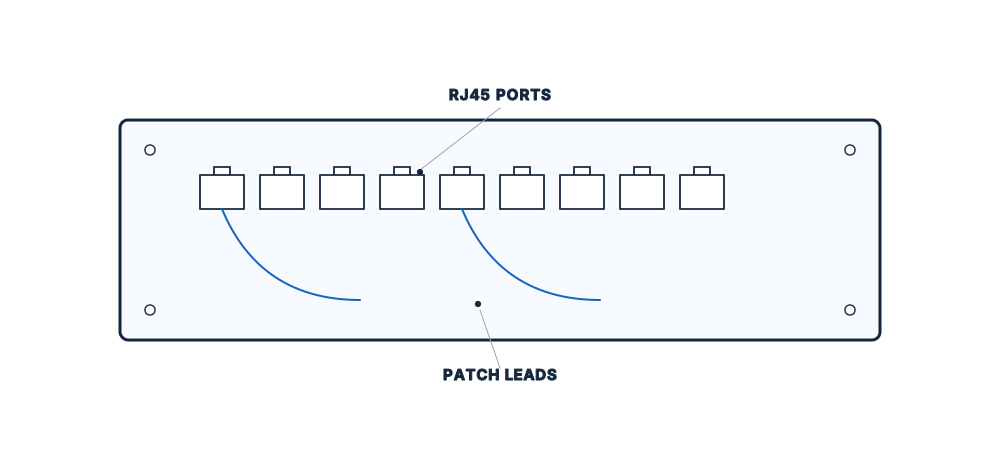
- Patch panel at the central termination point — 12-port or 24-port depending on installation size
- Cable testing — every port verified for continuity, length, pin map, and (on Cat6a) full TIA-568-C.2 compliance
- Cable labelling — both ends labelled with port number and location, schedule sheet provided
- Patch leads supplied — high-quality factory-terminated patch cords for both the wall plate and the patch panel
For commercial installs we additionally provide a 19" rack, vertical cable management, and POE+ switch sizing recommendations.
NSW Compliance
Data cabling work in Australia is regulated by the ACMA Cabling Provider Rules. Every cable that connects to the telecommunications network — including a patch cord plugged into the NBN modem — must be installed by an ACMA-registered cabling provider. A standard electrician without cabling registration cannot legally terminate or test a network port that connects to the carrier network.
Our credentials:
- ACMA Cabling Provider registration (Open Registration)
- NSW electrical contractor licence
- $20 million public liability insurance
- Compliant with AS/CA S008 (Customer Cabling Rules) and AS/CA S009 (Installation requirements)
Every install we complete is issued with a TCA1 cabling-installation form (customer cabling record) plus the test certificates per port for your IT support file.
Pricing Approach
Data cabling pricing in Sydney depends on:
- Number of ports — most pricing is per outlet, with a fixed component for the central termination point and the cable run
- Cable type — Cat6 is the standard; Cat6a is required for 10 Gbps installations or runs longer than 55 m
- Access to ceiling and wall cavities — modern homes with accessible ceilings are quickest; double-brick walls and slab-on-ground homes need more conduit and labour
Typical Sydney pricing:
- Home retrofit, 4 Cat6 ports terminated to patch panel: $1,100–$1,800
- Home retrofit, 8 Cat6 ports terminated to patch panel: $1,900–$2,800
- Small commercial fit-out, 16 Cat6a ports to 12U rack: $3,400–$5,500
Frequently Asked Questions
What does a data cabling installation actually include?
A complete installation covers design, cable supply, installation of Cat6, Cat6A, or multimode fibre runs, termination to a patch panel, and certification testing of every port before handover. We also install wall plates and data outlets at each location you need a wired network connection.
Do I need a licensed cabler or electrician for data cabling in Sydney?
Yes — in NSW, data cabling in commercial premises and any work touching the telecommunications network must be carried out by an ACMA-registered cabler. Sydney Electrical Service holds ACMA registration, so your installation is fully compliant and insurable.
Is a Level 2 ASP electrician required for data cabling work?
A Level 2 ASP licence is not required for standard structured cabling, but it becomes relevant when your data fit-out involves work on the main switchboard, consumer mains, or Ausgrid's network — common on larger commercial jobs. Having both qualifications under one contractor avoids the delays of coordinating separate trades.
Does data cabling need to comply with AS/NZS 3000 or any other standard?
Structured cabling installations must comply with AS/CA S009 (the Australian cabling standard) and, where applicable, AS/NZS 3080. We test every run with a calibrated cable certifier and provide a CCEW (Cabling Compliance and Endorsement Worksheet) certificate on completion so you have documented proof of compliance.
How long does a typical data cabling job take in Sydney?
A small residential job — say four to six wall ports in a home office — is usually completed in a single day. A commercial fit-out with dozens of ports across multiple floors takes two to five days depending on the floor plan, access, and whether a riser or patch room needs to be set up.
How much does data cabling cost in Sydney?
Cost varies with the number of ports, cable runs, building construction type, and whether a patch panel or cabinet is required. We provide a fixed-price quote after scoping the job — call 0433 462 902 or book online and we'll assess the site and give you a clear price before any work begins.
Can I install data cabling myself instead of hiring a professional?
You can run cables inside wall cavities yourself, but any connection to the telecommunications network — including patch panels that link to the incoming service — must be done by an ACMA-registered cabler under Australian law. DIY terminations also frequently fail certification testing, which means re-work costs that exceed the original install price.
Is it worth running Cat6 cable when Wi-Fi seems good enough?
For workstations, NAS drives, video conferencing setups, or any device that needs consistent throughput, a wired Cat6 or Cat6A connection eliminates the dropped packets, interference, and congestion that Wi-Fi suffers in dense Sydney apartments and busy offices. A properly certified cable run will still be performing reliably in 20 years.
Talk to a Level 2 Electrician — 24/7